Tuesday, November 22, 2016

A Guide to Shirt Collar Styles

A lot can be said about a man from his choice in collars. Today, we give you several options for collar styles to choose from.
Here are the most common styles in menswear, along with a little guidance.

The Forward Point Collar

Distinctive quality: the narrow space between the two collar points, which are often not covered by the jacket lapels.
Recommended for: traditionalists, minimalists, bowtie wearers, formal shirts, guys with round faces, narrow ties.

The Button-Down Collar
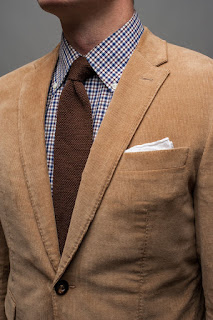
Distinctive quality: the buttons, of course.
Recommended for: casual settings, preppy guys, sportsmen, students, non-tie wearers.

The Spread Collar

Distinctive quality: the roughly 45 degree angle of the collar points.
Recommended for: businessmen, rich guys, men with large necks, wider neckties.

The Cutaway Collar

Distinctive quality: the severe angle of the collar points and the visible “noose” ends of the necktie.
Recommended for: fashionistos, statement makers, guys who wear Italian suits, guys with narrow faces.

The Club Collar

Distinctive quality: the rounded collar points (shown here with a collar pin).
Recommended for: club members, brainiacs, Ivy leaguers, guys who play by the rules, guys who appreciate exclusivity.

The Tab Collar

Distinctive quality: the hidden button that fastens the two collar points together under the tie knot (causing the knot to lift and the collar to crease at its midpoint).
Recommended for: guys with strong attention to detail, guys who hate collar flares, guys who take pride in their tie dimples, guys who enjoy the art of dressing.

The Power Collar

Distinctive quality: a taller neckband that has two buttons on the collar.
Recommended for: large athletic guys, guys with long necks, confident guys, substantial neckties, guys with large personalities.

The Band Collar

Distinctive quality: the lack of a collar, really. It’s just a neckband.
Recommended for: artists, outdoorsmen, guys who work with their hands, guys who enjoy layering, guys who are nostalgic about old times.
——————-
Thanks, as always, for reading.


Credit: Dan Trepanier

Friday, November 18, 2016

The Capsule Wardrobe: Chocolate Linen

Welcome!!! Hope you enjoyed the Men's Fashion History and how it evolves over the year. Here at Luxury Men we don’t want you to buy more clothes. We want you to buy the right clothes, so you can wear them comfortably and not have to replace them every year. A smart wardrobe is one that is built around versatility and longevity. Ideally, the majority of the pieces can be mixed-and-matched to create different outfits for different occasions.
To illustrate this point, here’s the first installment in our “Capsule Wardrobe” series, where we give an example of a smart wardrobe built around, what else, a tailored suit in a seasonal fabric. Here’s 10 pieces (with a couple accessories) to make 5 different outfits.
  • One 3/4 length khaki trench coat
  • One chocolate brown pure linen suit
  • One washed selvedge denim jacket
  • One green striped oxford shirt
  • One chestnut brown patterned silk tie
  • One long-sleeved striped linen crewneck
  • One pair of stone grey chinos
  • One pair of chocolate brown suede chelsea boots
  • One pair of cognac brown leather loafers
  • One brown felt fedora

All Business

 
A lightweight trench coat is an essential for Spring, especially if you live in a rainy climate. It’s functional, versatile, and it’s never going out of style. Trench coats like this were invented by the military to keep soldiers dry and anchor their weapons, and they’ve been a staple in classic menswear ever since.

Date Night

We just highlighted the uber-versatile slim-fit denim jacket. The chocolate suede chelsea boots are part of our current Spring Menswear.

Business Casual

A neutral chino, especially in light grey, is one of the best pieces you can invest your hard earned money in. Have them properly tailored and you’ll be wearing them for just about any occasion.

Dining Out

An unstructured suit jacket in a textured fabric, like this pure linen, is virtually identical to a sportcoat. It works just as well with chinos or jeans as it does with the matching trousers.

Weekend Chillin’

I really can’t say enough about unstructured suits in seasonal, textured fabrics. They are the foundation of my wardrobe, and the cornerstone of the upcoming Articles of Styletailoring collection. Just like the jacket, a well tailored suit trouser in a seasonal cloth can be a workhorse in your casual wardrobe too.
——————————————————
I hope this gets you thinking about adding some versatility into your wardrobe and getting the best bang for your buck by investing in quality menswear that you can rely on.
Thanks, as always, for reading.


Credit: Dan Trepanier

Thursday, November 17, 2016

A Brief History of Men’s Style - 2010s: The Evolution of Style Online

2010s: The Evolution of Style Online

The 2010s have brought us the evolution of the “fashion star”. Fashion bloggers have become mainstream. On the one hand, suddenly fashion is in the hands of the people, producing a larger variety of styles, reviews, and opinions than ever before. On the other hand, those being watched are naturally encouraged to try harder and harder to stand out from the crowd. “Peacocking” became a menswear term in the early part of the decade for “trying too hard”, although men have generally become more confortable with subtle, tasteful styling. 
This period also marked the widespread acceptance of online shopping. Style enthusiasts from all over the world now have access to more brands than ever, from the convenience of their homes. The internet also allowed for more start-up brands than ever, marketed using social media and funded with online resources like kick-starter. In a way, we’re starting to see the re-surgence of the small brand, fueled by the power of the internet and the desire for consumers to have something limited and exclusive. The best part is, middle men are getting cut-out every day. Department stores, who’s business is marking-up goods that have already been marked-up by the wholesaler, are losing their stranglehold on the market as designers now have a scalable solution to sell their products directly to their consumers.
Ultimately my hope for the future of menswear is that we can get back to the ideals of classic dress established in the 1930s, and gradually add personal influences from there. Its starts with understanding that there is one style that is best suited for each of us…our bodies, our lifestyles, our personalities, etc. Sure there is plenty of variation within that one style, but it shouldn’t require purchasing a new wardrobe every season, but rather adding well-made items to a lifetime collection of beautiful pieces that properly present, and represent, the wearer.


credit: Dan Trepanier

Wednesday, November 16, 2016

A Brief History of Men’s Style - 2000s: Hip-Hop & European Tailoring

2000s: Hip-Hop & European Tailoring

Menswear in the new millennium was influenced primarily by hip-hop culture for the youth, and European “slim fit” tailoring for the older gents. The suit finally started to slim down, as the “European cut” became highly sought after in America, to the point where eventually it became hard to find stores that didn’t carry “slim fit”. The internet also made it easier for men to learn about menswear and share their opinions with fellow style enthusiasts. We saw the birth of the first menswear blogs, with this one starting in 2009.


credit: Dan Trepanier

Tuesday, November 15, 2016

A Brief History of Men’s Style - 1990s: Baggy Business Casual

1990s: Baggy Business Casual 

This may be perhaps the worst-dressed decade of them all. The fashion in the 1990s was the genesis of a sweeping shift in the western world: the beginning of the adoption of tattoos and body piercings. This brought back the indifferent, anti-conformist approach to fashion, leading to the popularization of the casual chic look; this included T-shirts, distressed jeans, oversized hoodies, and trainers. “Business Casual” also enters the lexicon as corporate offices generally become less formal, ultimately causing the suit to get bigger and uglier than ever.


credit: Dan Trepanier

Friday, November 11, 2016

A Brief History of Men’s Style - 1980s: Power Dressing

1980s: Power Dressing

In the 1980s things got a little more serious, with broad shoulders framing power ties and suspenders. Bold colors and graphic patterns conveyed a new national confidence and businessmen took to power dressing with an emphasis on expensive clothing and gaudy accessories. 


credit: Dan Trepanier


Thursday, November 10, 2016

A Brief History of Men’s Style - 1970s: Disco Funk

1970s: Disco Funk

The early 1970s were a continuation of late 1960s hippie rebel fashion. For men this particularly meant bell bottom jeans, tie dye shirts, and military surplus clothing. The most popular accessories of the early 1970s for men were homemade, with necklaces, headbands, and bracelets being made from all-natural materials such as wood, hemp, and leather. 
Men began to wear stylish three-piece suits (which became available in a bewildering variety of colors) which were characterized by wide lapels, wide legged or flared trousers, and high-rise waistcoats. Neckties became wider and bolder, and shirt collars became long and pointed as the “disco funk” was all the rage.


credit: Dan Trepanier